News
Perseids meteor shower peaks this Wednesday - 10th Aug 2009
This week sees the arrival of the Perseids meteor shower, which result from the Earth passing through debris left behind by the comet Swift Tuttle, last time it passed near the sun. The Perseids occur at the same time each year, and this year will reach a maximum at around 1600BST on Wednesday 12 August. Although this is in the daytime for UK observers, it will still be worthwhile having a look up on the nights of 11 and 12 August. You can expect to see up to 100 shooting stars per hour from a very dark site in ideal conditions. This year conditions aren't ideal (the Moon is up, and will drown out the fainter meteors), and if you're observing from a town or city the light pollution will reduce what you can see, but you can still expect to see many more meteors than normal on these nights. The best thing is you don't need telescopes of binoculars to see the Perseid shower, your eyes will do just fine.
To celebrate this event Newbury Astronomical Society, with help from IYA2009
UK, is hosting a Twitter Meteorwatch, the first of its kind ever! Thousands
of people around the world will be tweeting their images of the night sky,
as well as asking and answering questions. In order to take part, you need
to have a Twitter account; you can get one easily at http://twitter.com/ and
it's free. Once you have one, follow @NewburyAS and @astronomy2009uk to keep
up to date with what's happening. You can also search for #meteorwatch to
see what everyone else is saying.
To find out more visit: http://newburyas.wordpress.com/2009/08/03/twitter-meteorwatch/
Summer Solstice Solar Party - 20th June 2009
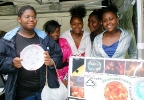
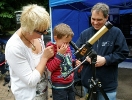
Birmingham recently enjoyed a Summer Solstice Solar Party at Cannon Hill Peoples Park Activities included solar observing, a camera obscura, Ishango Science Club's constellation picnic plates, Planets Suite Pancakes and more. For more information see the full article.

Lead partner for North East Partnership - 23rd April 2009
Pete Edwards, who leads the physics outreach programme at Durham University, has confirmed that they are keen to lead the co-ordination of the Dark Sky North East Partnership. The North East has some of the darkest skies in England, and the partnership includes the new Observatory in Kielder Forest.
 West Midlands Partnership Launched - 2nd March 2009
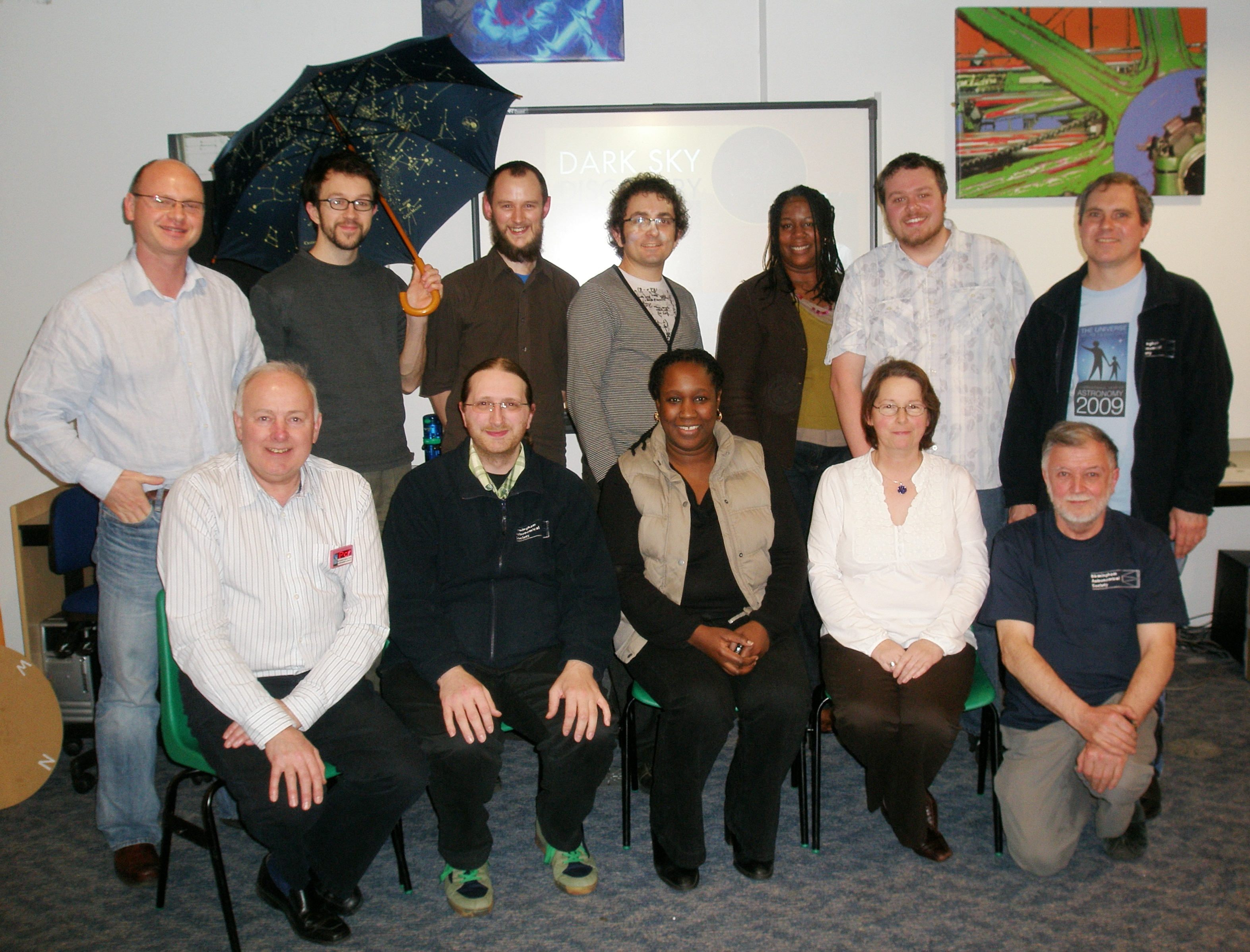
Professional and amateur astronomers, planetarium presenters, educators and open space managers gathered for a workshop at Thinktank Birmingham Science Museum on 28 February to form the West Midlands Dark Sky Partnership and to develop a programme that will involve community groups in their local dark skies as windows into the universe.
Royal Astronomical Society Grant Awarded - 15th December 2008
The Royal Astronomical Society has awarded a £15,000 grant to the project. This will allow the development of this website, formation of partnerships across the UK, and running demonstration events.